
Top 8 examples of manufacturing technologies shaping 2025
Manufacturing is no longer just about the assembly line; it's a dynamic ecosystem powered by digital innovation and intelligent systems. From additive manufacturing crafting parts once deemed impossible, to AI-driven robots performing tasks with superhuman precision, the entire production process is shifting dramatically. To effectively navigate this evolution, it's beneficial to gain a comprehensive understanding of the broader manufacturing landscape before focusing on individual components.
This article dives straight into 12 pivotal examples of manufacturing technologies that are actively reshaping factory floors today. We will move beyond high-level overviews to provide a strategic breakdown of each technology, exploring its core functions, real-world applications, and the tangible benefits it unlocks for modern enterprises.
More importantly, this listicle will analyze how immersive solutions, like Augmented and Virtual Reality (AR/VR), are acting as powerful catalysts. We'll examine how XR amplifies the impact of these advanced systems by transforming critical areas such as workforce training, complex maintenance procedures, and daily operational workflows. Prepare to go beyond surface-level descriptions. The following sections offer actionable insights and replicable strategies needed to integrate these powerful tools and lead in this new era of intelligent production.
1. 3D Printing / Additive Manufacturing
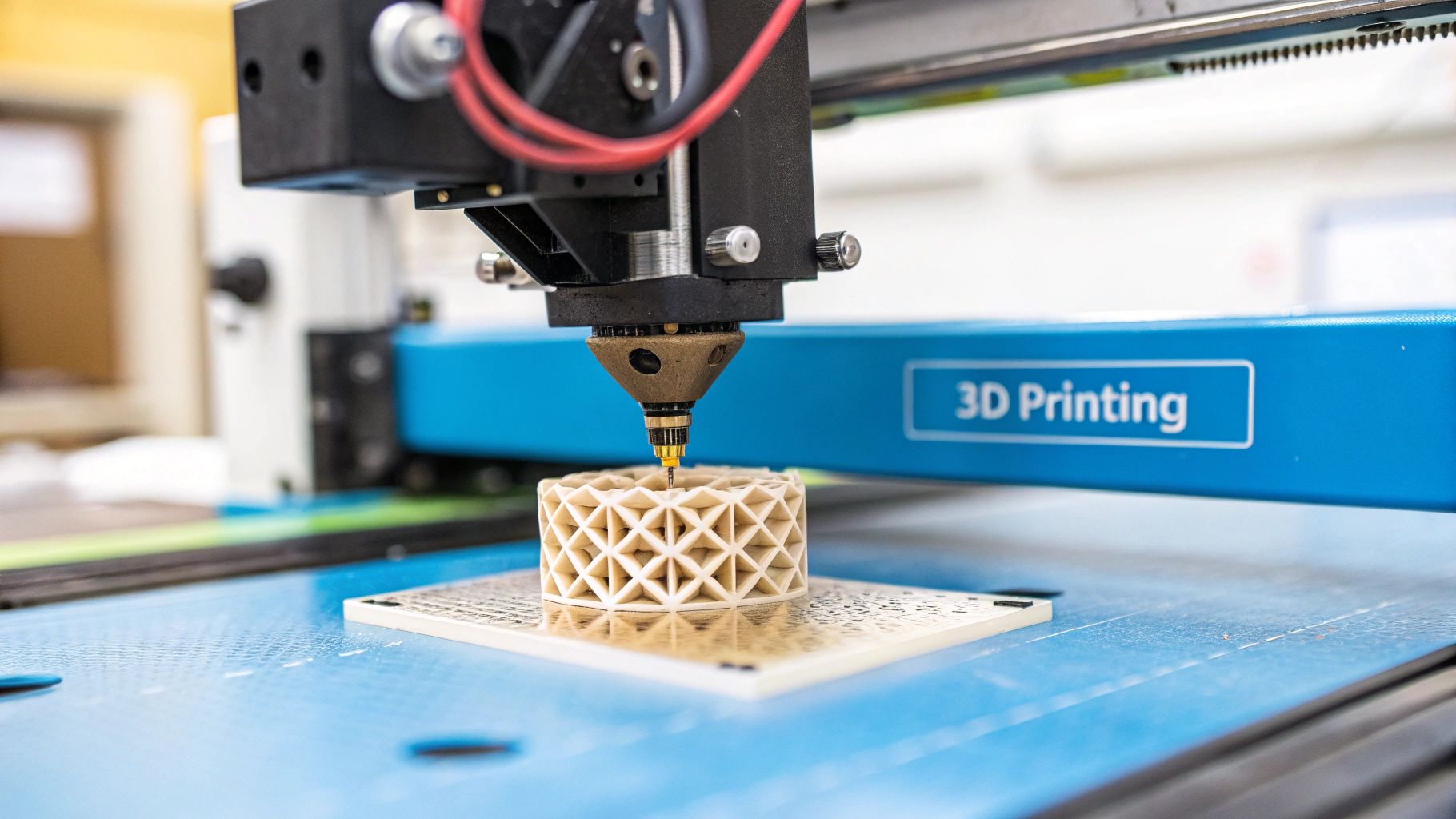
Additive Manufacturing (AM), commonly known as 3D printing, is a transformative process that constructs three-dimensional objects layer-by-layer from a digital file. Unlike traditional subtractive methods that cut material from a larger block, AM adds material-such as plastic, metal, or resin-only where needed. This approach is one of the most versatile examples of manufacturing technologies because it minimizes waste and enables the creation of highly complex, lightweight, and consolidated parts that are impossible to produce with conventional techniques.
Strategic Analysis
Leading companies like Boeing and GE Aviation use AM to produce lightweight aerospace components, reducing aircraft weight and improving fuel efficiency. Similarly, automotive giants such as Ford and BMW leverage 3D printing for rapid prototyping, drastically shortening design-to-production cycles. In the medical field, the technology is used to create patient-specific surgical guides and custom implants, improving surgical outcomes.
Strategic Insight: The primary advantage of additive manufacturing lies in its capacity for complexity without additional cost. It decouples part complexity from manufacturing cost, allowing engineers to design for optimal performance rather than for manufacturability.
Actionable Takeaways
To effectively integrate this technology:
- Start Small: Begin by printing non-critical parts, tools, jigs, and fixtures to build expertise and demonstrate ROI before moving to end-use components.
- Design for Additive (DfAM): Invest in training your design and engineering teams on DfAM principles. Optimizing a part for a specific AM process is crucial for maximizing benefits like weight reduction and part consolidation.
- Integrate XR for Training: Use Augmented Reality (AR) to overlay digital work instructions onto 3D printers, guiding operators through complex setup, calibration, and maintenance procedures. This reduces errors and accelerates operator proficiency.
2. Computer Numerical Control (CNC) Machining
Computer Numerical Control (CNC) machining is a subtractive manufacturing process that uses pre-programmed computer software to dictate the movement of factory tools and machinery. In contrast to additive methods, CNC begins with a solid block of material (a blank) and precisely removes material using tools like drills, mills, and lathes to achieve the final design. This automated process is one of the most fundamental examples of manufacturing technologies for its ability to produce parts with extremely tight tolerances, superior surface finishes, and high repeatability from metals, plastics, and composites.
Strategic Analysis
Industry leaders such as Haas Automation and Mazak provide the machinery that enables countless sectors to thrive. In aerospace, CNC machining is essential for creating mission-critical engine components and structural elements from high-strength alloys. The medical device industry relies on CNC to manufacture intricate surgical instruments and custom implants with biocompatible materials. Similarly, automotive manufacturers use it for producing engine blocks, transmission parts, and molds for mass production, ensuring consistency and performance.
Strategic Insight: The core strategic value of CNC machining is its unparalleled precision and repeatability at scale. It offers a reliable, high-fidelity pathway from digital design to physical part, making it indispensable for industries where failure is not an option.
Actionable Takeaways
To effectively leverage this technology:
- Prioritize CAM Software Training: Invest in robust training for Computer-Aided Manufacturing (CAM) software. This empowers programmers to create optimized toolpaths that reduce cycle times, minimize tool wear, and improve part quality.
- Implement Tool Life Management: Utilize systems to track tool usage and predict failures. Proactively replacing worn tools prevents costly workpiece damage and unscheduled downtime, ensuring production consistency.
- Use VR for Complex Setups: Deploy Virtual Reality (VR) simulations for training machinists on complex multi-axis machine setups and operation sequences. This allows trainees to practice in a safe, controlled environment, reducing the risk of crashing expensive equipment.
3. Injection Molding
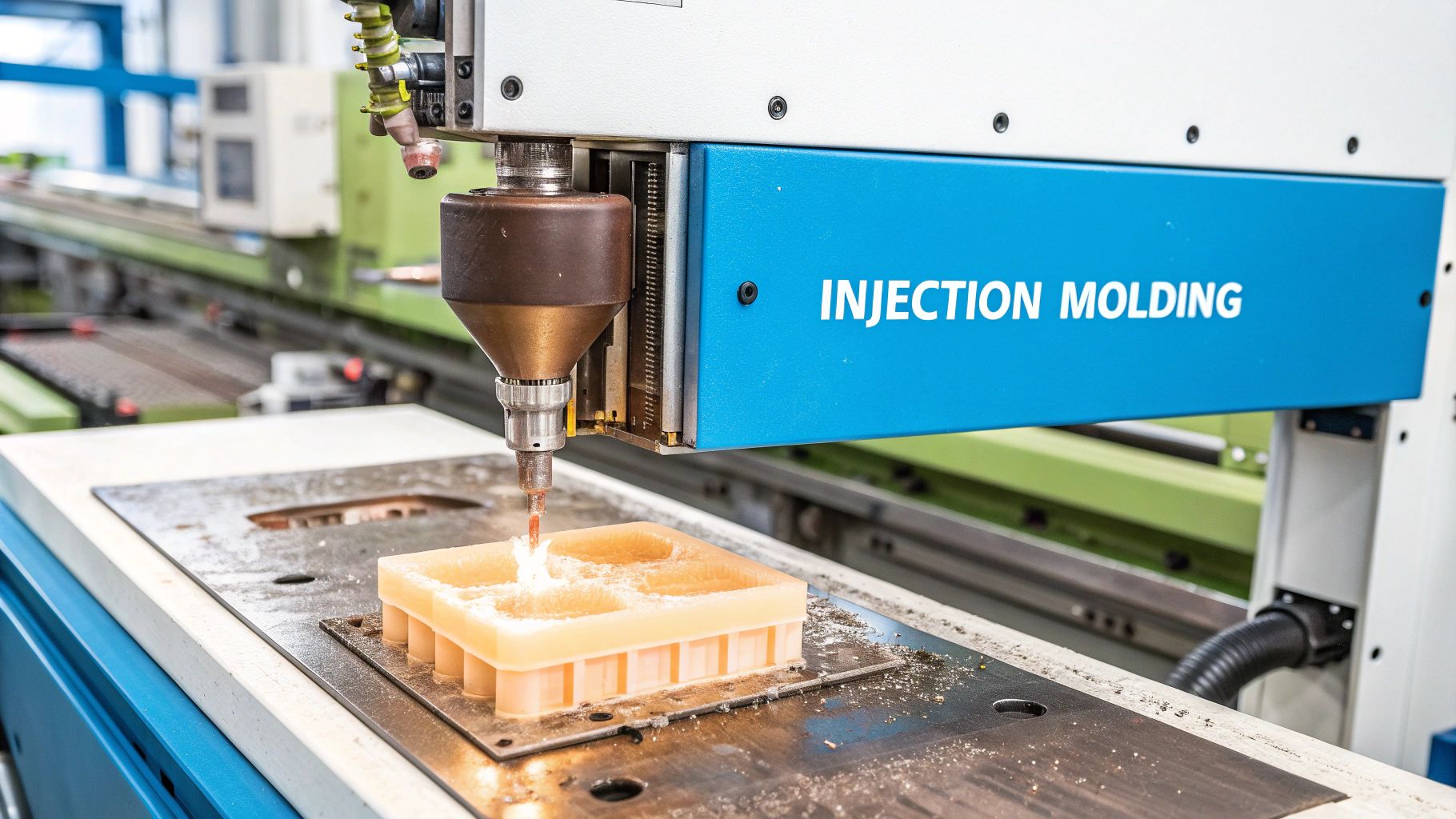
Injection Molding is a high-volume manufacturing process where molten material, most commonly thermoplastic, is injected under high pressure into a precisely machined mold cavity. The material cools, solidifies, and is then ejected, producing identical parts with exceptional speed and consistency. This method is one of the most cost-effective examples of manufacturing technologies for mass production, enabling the creation of everything from complex automotive dashboards to simple bottle caps with high repeatability.
Strategic Analysis
Industry leaders like LEGO have perfected this process, producing billions of bricks annually with microscopic precision to ensure perfect interlocking fits. In the medical sector, companies such as Becton, Dickinson and Company (BD) rely on injection molding to manufacture sterile, single-use medical devices like syringes and IV components at massive scale. Automotive manufacturers use it extensively for creating durable, lightweight interior components and housings, while consumer goods giant Procter & Gamble uses it for packaging solutions across its product lines.
Strategic Insight: The core strategic value of injection molding is its unparalleled scalability. While initial mold tooling costs are high, the per-unit cost drops dramatically as production volume increases, making it the dominant choice for mass-market products.
Actionable Takeaways
To maximize the benefits of injection molding:
- Prioritize DfM: Engage in rigorous Design for Manufacturability (DfM) analysis early in the design phase to optimize part geometry for molding. This minimizes defects, reduces cycle times, and lowers tooling costs.
- Select Materials Wisely: Choose polymers based on the specific mechanical, thermal, and chemical requirements of the end-use application. Material selection directly impacts part performance, durability, and cost.
- Utilize VR for Mold Design Review: Implement Virtual Reality (VR) to conduct immersive mold design reviews. This allows engineering and tooling teams to virtually "walk through" complex mold assemblies, identify potential cooling channel inefficiencies, and spot collision risks before committing to expensive physical tooling.
4. Robotics and Industrial Automation
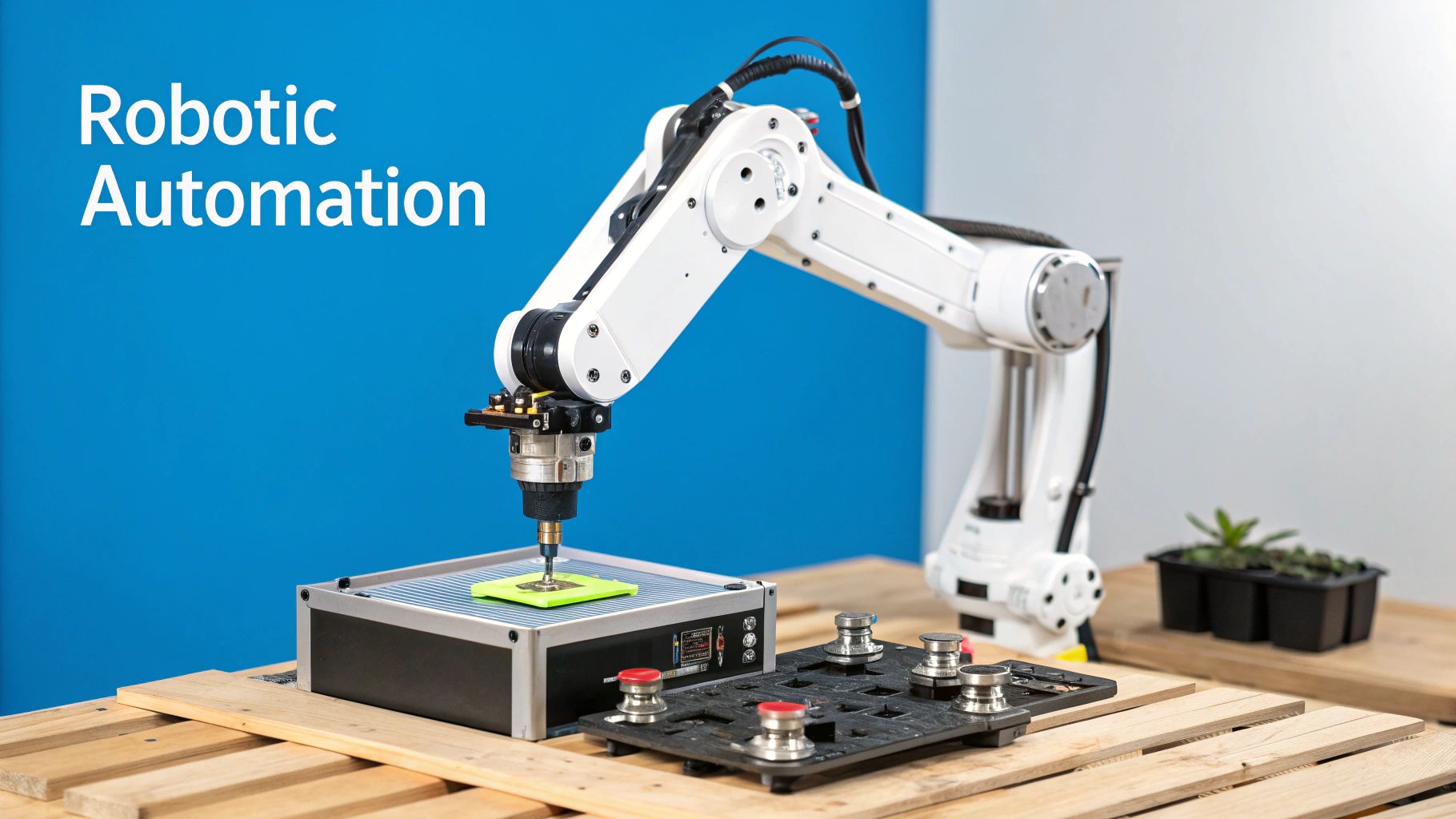
Robotics and industrial automation involve the use of programmable robots and automated systems to perform repetitive, hazardous, or precision-critical manufacturing tasks. Modern industrial robots, often integrated with computer vision and AI, can operate autonomously or collaboratively alongside human workers. This technology is a cornerstone example of manufacturing technologies that boost productivity, improve quality, and enhance worker safety by taking over strenuous and monotonous jobs, allowing human talent to focus on more complex, value-added activities.
Strategic Analysis
Automotive giants like Tesla and BMW have famously automated their assembly lines for tasks like welding, painting, and component placement, achieving unprecedented speed and consistency. In electronics, suppliers for companies like Apple rely on precision robotics for assembling intricate devices. Beyond heavy industry, companies such as Fanuc and KUKA provide robotic solutions for pharmaceutical packaging and food processing, ensuring sterile and efficient operations. You can learn more about the role of automation in the manufacturing process and its impact on modern production.
Strategic Insight: The key benefit of modern robotics is its adaptability. Collaborative robots, or "cobots," can be safely deployed next to humans without extensive safety caging, offering a flexible automation solution that can be easily reprogrammed for different tasks.
Actionable Takeaways
To effectively integrate this technology:
- Target Repetitive Tasks: Start by automating high-volume, repetitive, or ergonomically challenging tasks to achieve the quickest and most significant ROI.
- Invest in Change Management: Proactively train employees to work with, program, and maintain robotic systems. This reskilling effort is crucial for a smooth transition and fosters a culture of innovation.
- Use VR for Training: Implement Virtual Reality (VR) simulations for robotics training. This allows operators and maintenance technicians to practice programming, troubleshooting, and safety protocols in a safe, controlled environment without risking damage to expensive equipment or disrupting production lines.
5. Lean Manufacturing
Lean Manufacturing is a systematic production methodology focused on minimizing waste within manufacturing systems while simultaneously maximizing productivity and value for the customer. Originating from the Toyota Production System, this approach emphasizes continuous improvement (Kaizen), just-in-time production, and empowering employees to streamline processes. It is a cornerstone among examples of manufacturing technologies because it targets the elimination of the "eight wastes," such as defects, overproduction, and waiting, to create a more efficient, responsive, and cost-effective operation.
Strategic Analysis
The principles of Lean are famously embodied by Toyota, which uses the system to maintain high quality and efficiency. Dell Computer revolutionized the PC industry by applying Lean to its build-to-order model, drastically reducing inventory and delivering customized products quickly. Similarly, Harley-Davidson leveraged Lean principles to transform its manufacturing operations, cutting production times and improving overall product quality to better compete in the global market.
Strategic Insight: The core strength of Lean Manufacturing is its focus on creating a culture of continuous improvement. It is not a one-time fix but a long-term philosophy that empowers every employee to identify and eliminate inefficiencies, leading to sustained operational excellence.
Actionable Takeaways
To effectively integrate this methodology:
- Start with Value Stream Mapping: Map your entire production process from raw material to the final customer to visually identify bottlenecks, delays, and areas of waste. This provides a clear roadmap for improvement initiatives.
- Involve Frontline Workers: Engage the employees who perform the work in problem-solving and process improvement. Their firsthand knowledge is invaluable for identifying practical solutions and fostering a sense of ownership.
- Leverage VR for Lean Training: Use Virtual Reality simulations to train employees on Lean principles like 5S (Sort, Set, Shine, Standardize, Sustain) and standardized work in a risk-free environment. This immersive training improves retention and accelerates the adoption of Lean practices on the factory floor.
6. Internet of Things (IoT) in Manufacturing (Industry 4.0)
The Internet of Things (IoT) in manufacturing, a core component of Industry 4.0, involves a network of interconnected sensors, devices, and software systems that collect and exchange data in real-time. This digital ecosystem transforms traditional production lines into smart factories where machines, people, and processes are seamlessly integrated. This approach is one of the most impactful examples of manufacturing technologies because it enables data-driven decision-making, predictive maintenance, and optimized resource allocation, leading to significant gains in efficiency and productivity.
Strategic Analysis
Industry leaders like Siemens and Bosch have implemented comprehensive IoT solutions to create digital twins of their factories, allowing them to simulate and optimize processes before physical implementation. Similarly, GE's Predix platform enables industrial companies to monitor asset performance and predict failures, minimizing unplanned downtime. In semiconductor fabrication, IoT sensors are used to monitor environmental conditions with extreme precision, ensuring the high yields required for complex chip manufacturing.
Strategic Insight: The true power of IoT in manufacturing is its ability to create a transparent, self-optimizing system. By providing a constant stream of high-quality data, it moves operations from a reactive "fix-it-when-it-breaks" model to a proactive, predictive one.
Actionable Takeaways
To effectively integrate this technology:
- Start with a Pilot: Begin by deploying IoT sensors on a single, non-critical production line to monitor key performance indicators (KPIs) like Overall Equipment Effectiveness (OEE) and demonstrate tangible ROI.
- Prioritize Cybersecurity: Develop a robust cybersecurity strategy from the outset. As you connect more assets, you also create more potential vulnerabilities that must be secured to protect operational integrity.
- Leverage VR for Data Visualization: Use Virtual Reality (VR) to create immersive digital twin environments where managers and engineers can visualize complex IoT data streams in 3D. This helps identify bottlenecks and operational inefficiencies that are difficult to spot in traditional dashboards. Discover more innovations in the manufacturing industry.
7. Additive Subtractive Hybrid Manufacturing
Additive Subtractive Hybrid Manufacturing integrates the best of both worlds by combining additive processes like 3D printing with subtractive methods such as CNC machining into a single, unified system. This approach builds a part layer-by-layer and then uses precision machining to create fine features, tight tolerances, and smooth surface finishes on the same machine. This synergy makes it a standout among examples of manufacturing technologies for producing highly complex parts with internal features and superior finishes in one streamlined operation.
Strategic Analysis
Leading machine tool manufacturers like DMG Mori and Mazak have pioneered hybrid systems that are transforming industries. In aerospace, these machines are used to repair or add features to high-value components like turbine blades, significantly extending their service life. The medical industry leverages this technology to create custom, biocompatible implants with complex, porous internal structures for better bone integration, combined with precisely machined surfaces for joint articulation.
Strategic Insight: The core value of hybrid manufacturing is its ability to create "net-shape" or even finished parts in a single clamping. This drastically reduces lead times, eliminates errors from multiple machine setups, and enables geometries that are impossible to produce otherwise.
Actionable Takeaways
To leverage this advanced technology:
- Design for Hybrid: Train engineers to think beyond the constraints of separate additive or subtractive processes. Design parts that specifically utilize the strengths of both, such as internal cooling channels with precision-machined connection ports.
- Invest in Simulation: Before committing to a physical build, use advanced simulation software to validate the entire hybrid process. This helps optimize toolpaths, predict material behavior, and prevent costly failures.
- Utilize VR for Process Planning: Use Virtual Reality (VR) to create a digital twin of the hybrid machine and workspace. This allows engineers and operators to simulate the entire production sequence, from material deposition to final machining, identifying potential collisions and optimizing the workflow in a safe, virtual environment.
8. Advanced Materials Manufacturing
Advanced Materials Manufacturing involves the production and processing of engineered materials with superior properties, such as composites, advanced ceramics, and high-performance polymers. Unlike traditional materials like steel or aluminum, these materials are designed at a molecular level to achieve specific performance characteristics like exceptional strength-to-weight ratios, high-temperature resistance, or unique electrical conductivity. This process represents a significant leap forward in our list of examples of manufacturing technologies, enabling products that are stronger, lighter, and more durable than ever before.
Strategic Analysis
Companies like Toray Industries and Hexcel lead the way in producing carbon fiber composites for aerospace, famously used in the Boeing 787 to reduce weight and improve fuel efficiency. In the semiconductor industry, silicon carbide ceramics are essential for manufacturing equipment due to their thermal stability. Automotive manufacturers utilize advanced polymers to lightweight vehicles, while the medical field relies on specialized titanium alloys for biocompatible implants. These applications demonstrate a shift toward designing the material itself as a core component of the final product.
Strategic Insight: The competitive advantage of advanced materials comes from enabling performance breakthroughs that are impossible with conventional materials. The focus shifts from optimizing a design around a material's limitations to creating a new material that meets the ideal design's requirements.
Actionable Takeaways
To leverage advanced materials manufacturing:
- Prioritize Material Validation: The unique properties of these materials require rigorous testing. Establishing a dedicated new materials testing laboratory is crucial for quality assurance and process validation before scaling production.
- Invest in Specialized Equipment: Processing advanced materials often requires specialized machinery for handling, curing, or machining. Plan for this capital investment early and ensure your workforce is trained to operate it.
- Utilize VR for Material Science Training: Create virtual reality simulations that allow engineers and technicians to visualize material microstructures and understand how processing variables affect final properties. This deepens expertise without consuming expensive physical materials for trial-and-error learning.
9. Quality Control and Testing Automation
Quality Control and Testing Automation involves deploying advanced systems that use computer vision, sensors, AI, and machine learning to inspect products for defects and ensure they meet strict standards. This technology replaces inconsistent and slow manual inspection with high-speed, accurate, and repeatable quality assurance. As one of the most critical examples of manufacturing technologies, it guarantees that products meet dimensional accuracy, functional requirements, and cosmetic criteria without human error, significantly reducing waste and rework.
Strategic Analysis
Industry leaders like Cognex and Keyence provide automated inspection systems used across numerous sectors. In the automotive industry, these systems inspect body panels for minute surface imperfections and ensure weld integrity. Semiconductor manufacturers rely on them to detect microscopic defects on silicon wafers, a task impossible for the human eye. Similarly, pharmaceutical companies use automated vision systems to verify tablet counts and check for impurities, ensuring patient safety and regulatory compliance.
Strategic Insight: The core value of automated quality control is its ability to generate vast amounts of actionable data. It moves quality assurance from a reactive, end-of-line gate to a proactive, integrated process that provides real-time feedback for continuous improvement.
Actionable Takeaways
To implement this technology successfully:
- Define Clear Specifications: Start by digitizing and clearly defining all quality parameters. The system is only as good as the rules it follows, so precise defect classifications and tolerance levels are essential.
- Establish Feedback Loops: Integrate the inspection system's data with upstream production processes. Use the insights to identify root causes of defects and make immediate adjustments, driving a culture of manufacturing quality improvement.
- Leverage VR for Simulation: Use Virtual Reality (VR) to simulate the inspection process and train AI models on a wider range of defect types, including rare edge cases. This accelerates model training and improves detection accuracy before deploying the system on the live production line.
10. Precision Metal Casting
Precision metal casting encompasses advanced techniques like investment, sand, and lost-foam casting, designed to produce complex metal components with extremely tight tolerances and high-quality surface finishes. This process involves creating a detailed mold, often from a 3D-printed or wax pattern, into which molten metal is poured. Once solidified, the mold is removed to reveal a near-net-shape part. This is one of the most enduring examples of manufacturing technologies because it excels at creating intricate internal and external geometries that are difficult or impossible to machine from a solid block.
Strategic Analysis
Industry leaders like Precision Castparts Corp and Howmet Aerospace rely on investment casting to manufacture mission-critical aerospace components, such as single-crystal turbine blades for jet engines. In the automotive sector, advanced sand and lost-foam casting are used for producing complex engine blocks and cylinder heads with integrated cooling channels, enhancing performance and durability. This technology is indispensable for parts requiring high strength, specific metallurgical properties, and complex shapes with minimal post-processing.
Strategic Insight: The core advantage of precision casting is its ability to produce complex, high-strength metal parts in high volumes with excellent repeatability. It enables the consolidation of multiple fabricated components into a single, robust casting, reducing assembly costs and potential points of failure.
Actionable Takeaways
To effectively leverage this technology:
- Utilize Simulation: Implement mold-flow simulation software during the design phase to predict how molten metal will fill, cool, and solidify. This helps optimize gate and riser placement, preventing defects like porosity and shrinkage.
- Invest in Process Control: Focus on rigorous monitoring of key process variables such as metal temperature, pouring speed, and mold conditions. Statistical process control (SPC) is crucial for maintaining quality and consistency.
- Enhance Inspections with AR: Use Augmented Reality to overlay digital CAD models onto finished castings. This allows inspectors to quickly identify surface defects, dimensional deviations, or post-processing errors with greater accuracy than manual methods.
11. Digital Twin Technology
Digital Twin technology creates a virtual, dynamic replica of a physical asset, process, or system. This digital model is fed with real-time data from sensors on its physical counterpart, allowing it to mirror the real-world object's state, performance, and operational history. As one of the most data-intensive examples of manufacturing technologies, it enables companies to simulate, predict, and optimize performance without disrupting physical operations. This virtual environment serves as a risk-free sandbox for testing changes, predicting failures, and training personnel.
Strategic Analysis
Industry leaders are using digital twins to transform their operations. Siemens creates comprehensive digital twins of entire manufacturing processes, enabling virtual commissioning and process optimization. GE applies the technology to its wind turbines, using the digital models to optimize energy output and predict maintenance needs for each unit. Similarly, automotive companies like BMW simulate entire production lines to identify bottlenecks and test new layouts before making costly physical changes.
Strategic Insight: The core value of a digital twin is its ability to create a feedback loop between the physical and digital worlds. It moves beyond simple simulation by using live data to continuously learn and update, providing an accurate, evolving model for predictive and prescriptive analytics.
Actionable Takeaways
To successfully implement digital twin technology:
- Build Incrementally: Start with a single, high-value asset or critical process. Attempting to model an entire factory at once is complex and expensive. Prove the concept and ROI on a smaller scale first.
- Ensure Data Infrastructure: A successful digital twin requires a robust IIoT (Industrial Internet of Things) infrastructure to collect and transmit high-quality, real-time data from sensors. Invest in connectivity and data management platforms.
- Leverage VR for Immersive Analysis: Integrate Virtual Reality (VR) with the digital twin to allow engineers and operators to "walk through" the virtual factory or inspect a digital machine. This immersive interaction makes it easier to spot design flaws, plan maintenance tasks, and train staff on complex procedures in a safe, controlled setting. For a deeper dive, you can learn more about real-world digital twin examples on aidarsolutions.com.
12. Sustainable and Green Manufacturing
Sustainable and Green Manufacturing refers to a system of production that prioritizes minimizing environmental impact while maximizing resource efficiency. This approach integrates principles like waste reduction, energy conservation, use of renewable materials, and circular economy models directly into the production lifecycle. Unlike traditional linear models of "take-make-dispose," green manufacturing is a holistic strategy that redesigns processes to be regenerative, making it one of the most critical examples of manufacturing technologies for long-term viability and corporate responsibility.
Strategic Analysis
Industry leaders are proving that sustainability is profitable. Patagonia builds brand loyalty and market share by using recycled materials in its apparel, while Interface revolutionized the flooring industry by creating modular carpet tiles from recycled and bio-based materials. Tesla aims for zero-waste production in its Gigafactories by extensively recycling battery components and other manufacturing byproducts. These companies demonstrate that integrating sustainability not only reduces environmental footprint but also drives innovation and creates a powerful competitive advantage.
Strategic Insight: The core advantage of green manufacturing is its ability to transform operational constraints into innovation opportunities. By designing for sustainability, companies can uncover new efficiencies, reduce long-term resource costs, and appeal to an increasingly eco-conscious consumer base.
Actionable Takeaways
To effectively integrate this technology:
- Conduct Lifecycle Assessments (LCAs): Start by analyzing the full environmental impact of a product, from raw material extraction to end-of-life disposal. Use this data to identify the most impactful areas for improvement.
- Engage the Supply Chain: Collaborate with suppliers to enforce sustainability standards and encourage the use of recycled or renewable materials. A sustainable product is only as strong as its least sustainable link.
- Utilize VR for Process Simulation: Use Virtual Reality to model and simulate new, greener manufacturing layouts and processes before physical implementation. This allows teams to optimize for energy efficiency and waste reduction in a risk-free digital environment, minimizing costly trial-and-error.
12 Manufacturing Technologies Comparison
| Technology | 🔄 Implementation Complexity | ⚡ Resource Requirements & Speed | 📊 Expected Outcomes | Ideal Use Cases | ⭐ Key Advantages / 💡 Tips |
|---|---|---|---|---|---|
| 3D Printing / Additive Manufacturing | Moderate–High: CAD, materials & post‑processing expertise | High equipment/material cost; slower at high volumes | Custom, complex parts; rapid prototyping; low material waste | Low-volume production, medical, aerospace prototypes, custom tooling | Enables complex geometries and customization; tip: optimize designs and plan post‑processing |
| Computer Numerical Control (CNC) Machining | High: CAM programming, tooling setup, skilled operators | High capex; fast production rates; material waste from cutting | High precision & repeatability; tight tolerances | Precision components, metal parts, medium-to-high volumes | Superior accuracy and speed; tip: invest in CAM training and batch similar jobs |
| Injection Molding | High upfront complexity: mold design and tooling | Very high mold cost; very fast cycle times at scale | Low per-unit cost at scale; consistent quality | High-volume plastic parts (generally 10k+), consumer goods | Extremely efficient at scale; tip: perform DFM early and use multi‑cavity molds |
| Robotics & Industrial Automation | High: systems integration, safety and programming | High capital and integration effort; enables 24/7 throughput | Improved consistency, safety, and long-term cost reduction | Repetitive/high-volume assembly, welding, material handling | Increases throughput and safety; tip: start with repetitive tasks and train staff |
| Lean Manufacturing | High: cultural change and sustained management | Low capital but high time/training investment; speeds cycles via waste reduction | Reduced costs, improved quality, faster lead times | All sectors aiming to eliminate waste and improve flow | Sustainable operational gains; tip: start with value stream mapping and involve frontline |
| IoT in Manufacturing (Industry 4.0) | High: network integration, data pipelines & security | Significant infrastructure and software investment; real-time enablement | Predictive maintenance, visibility, data-driven optimization | Smart factories, asset monitoring, predictive maintenance pilots | Real-time insights and reduced downtime; tip: pilot non‑critical systems and secure data |
| Additive‑Subtractive Hybrid Manufacturing | Very High: integrated hardware/software workflows | High equipment cost; can reduce total process time vs separate steps | Complex, high‑accuracy parts with reduced supports and waste | Aerospace, medical implants, complex metal components | Combines design freedom with precision; tip: validate processes and partner with experts |
| Advanced Materials Manufacturing | Very High: R&D, specialized processing & testing | High material and processing costs; scaling challenges | Superior performance (strength, weight, thermal) | Aerospace, defense, high-performance automotive, medical | Enables breakthrough capabilities; tip: invest in testing and supplier partnerships |
| Quality Control & Testing Automation | Moderate–High: ML models, calibration, integration | High initial investment; enables high-speed 100% inspection | Better defect detection, traceability, faster throughput | High-value/high-volume products requiring zero-defect | Consistent, rapid inspection; tip: define specs clearly and start with high-value items |
| Precision Metal Casting | Moderate–High: mold/process control and simulation | Moderate tooling costs; economical for medium–high volumes | Cost-effective complex metal shapes; near‑net‑shape parts | Engine blocks, turbine components, pump housings | Versatile for various metals; tip: use simulation and statistical process control |
| Digital Twin Technology | Very High: data integration, modeling, continuous maintenance | High data, computing and integration costs; enables virtual testing | Risk-free optimization, predictive maintenance, scenario planning | Critical/high-cost processes, R&D, production line optimization | Powerful simulation & prediction; tip: build incrementally and ensure data quality |
| Sustainable & Green Manufacturing | High: cross‑functional change, compliance & supplier alignment | High upfront investment; potential long-term energy/material savings | Lower environmental footprint, regulatory & brand benefits | Companies pursuing ESG goals, regulated industries, product stewardship | Long-term cost and reputation gains; tip: run lifecycle assessments and engage suppliers |
From Theory to Factory Floor: Implementing Your Technology Strategy
The journey through these diverse examples of manufacturing technologies reveals a clear and powerful narrative: the future of production is intelligent, interconnected, and incredibly efficient. From the layer-by-layer precision of Additive Manufacturing and the subtractive mastery of CNC Machining to the predictive power of Digital Twins and the vast sensor networks of IoT, we are witnessing a fundamental paradigm shift. These are not isolated innovations; they are interlocking pieces of a larger puzzle, collectively defining Industry 4.0. The common thread weaving them all together is the strategic use of data to drive decisions, optimize processes, and unlock unprecedented levels of productivity.
However, the greatest technology is only as effective as the people who operate it. Simply acquiring a new robotic arm, a 3D printer, or an IoT platform is not the final step; it is the first. The real challenge, and the greatest opportunity, lies in bridging the gap between advanced machinery and human expertise. This is where a forward-thinking implementation strategy becomes paramount.
Synthesizing Your Technology and Talent Strategy
Successful adoption of these advanced manufacturing technologies hinges on a dual-pronged approach that equally prioritizes technology integration and workforce enablement. The most significant ROI is realized when your team can confidently and competently manage, maintain, and innovate with the new tools at their disposal.
A critical takeaway from our exploration is that complexity is the new normal. Operating hybrid manufacturing systems, interpreting real-time data from IoT sensors, or troubleshooting an automated quality control line requires a higher level of skill than ever before. Traditional training methods, such as static manuals or off-site classes, often fall short in preparing teams for the dynamic, high-stakes environment of a modern factory floor. They lack the context, immediacy, and hands-on practice needed to build true proficiency and confidence.
Actionable Next Steps for Modern Manufacturers
To move from theory to tangible results, consider a phased approach that aligns with your specific operational goals.
-
Conduct a Technology-Skills Gap Analysis: Before investing, identify which of these examples of manufacturing technologies will have the most significant impact on your business. Simultaneously, assess your team's current skill set. Where are the knowledge gaps? What new competencies will be required to operate and maintain this technology?
-
Prioritize Integrated Training Solutions: Look beyond the hardware. As you budget for new equipment, allocate resources for modern training solutions that can accelerate learning. Immersive technologies like Augmented and Virtual Reality offer a powerful way to de-risk the adoption process. They allow employees to train on virtual models of new equipment, like a Digital Twin, before it even arrives on the factory floor.
-
Empower Your Workforce with On-Demand Support: The learning process doesn't end after initial training. Complex machinery and integrated systems will inevitably present novel challenges. Implementing a remote assistance platform using AR can connect your on-site technicians with senior experts instantly. This transforms troubleshooting from hours of downtime into minutes of guided, collaborative problem-solving, directly impacting your OEE (Overall Equipment Effectiveness).
The strategic integration of these technologies, from advanced materials to sustainable practices, is what separates market leaders from the rest. It's about building a resilient, agile, and intelligent manufacturing ecosystem. The ultimate goal is not just to make things faster or cheaper but to build a smarter operation from the ground up, empowered by a workforce that is as advanced as the technology it commands. Embracing this holistic vision is the key to unlocking sustainable growth and securing a competitive edge in the evolving industrial landscape.
Ready to empower your workforce to master the next generation of manufacturing technology? AIDAR Solutions provides immersive AR/VR platforms like AIDAR.SKILLS and AIDAR.SERVICE to accelerate training, reduce downtime, and ensure your team is prepared for the challenges of Industry 4.0. Explore how our solutions can amplify the ROI of your technology investments at AIDAR Solutions.


Comment(01)