
7 Field Service Management Best Practices for 2025
In today's competitive landscape, exceptional field service is no longer a goal—it's the standard. As customer expectations rise and operational complexities increase, organizations must move beyond traditional methods to maintain a competitive edge. The key lies in adopting a strategic framework built on proven field service management best practices. This guide provides a detailed roundup of seven essential strategies that drive efficiency, enhance customer satisfaction, and future-proof your operations. We will explore how integrating technologies like Augmented and Virtual Reality (AR/VR) for immersive training and remote expert assistance is revolutionizing the industry.
This article offers a blueprint for transforming your field operations from a cost center into a powerful driver of business growth. We will detail specific, actionable insights, moving beyond generic advice to provide practical implementation steps. To truly elevate operations and lay a strong blueprint for next-generation field service, integrating robust CRM solutions is essential for managing customer interactions and streamlining workflows. A well-implemented CRM for Field Service serves as the backbone for many of these advanced strategies, centralizing data and improving communication.
From optimizing real-time scheduling with AI to leveraging predictive analytics for proactive maintenance, these practices will equip your team to deliver faster, smarter, and more reliable service. You will learn how to:
- Implement a mobile-first platform for technician empowerment.
- Establish a robust knowledge management system with digital documentation.
- Improve customer communication for enhanced transparency and satisfaction.
- Utilize skills-based routing to ensure the right technician is on the right job.
- Leverage performance analytics for continuous operational improvement.
By adopting these field service management best practices, your organization can build a resilient, efficient, and customer-centric service model prepared for future challenges.
1. Real-Time Scheduling and Dispatch Optimization
At the core of any successful field service operation lies the ability to get the right technician to the right job at the right time. Real-time scheduling and dispatch optimization transforms this complex logistical puzzle into a streamlined, automated process. This practice moves beyond manual or semi-automated scheduling by using advanced algorithms and real-time data streams to make intelligent, dynamic decisions.
This strategic approach considers a multitude of variables simultaneously. It analyzes technician skill sets, certifications, parts inventory, location, availability, and even dynamic factors like traffic patterns and weather conditions. By processing this information instantly, the system automatically assigns the most suitable technician to each service request, ensuring optimal resource allocation and significantly reducing manual intervention. This level of automation is a cornerstone of modern field service management best practices, turning logistical hurdles into a powerful competitive advantage.
How It Works and Why It Matters
Implementing an intelligent scheduling system means that when a new service call is logged, the software instantly evaluates the entire field workforce. It identifies the technician who not only has the required skills but is also located closest to the job site, minimizing travel time and fuel costs. This practice is crucial for improving first-time fix rates, as the system ensures the assigned technician is fully equipped and qualified to resolve the issue on the first visit.
The benefits extend directly to the customer experience. Faster response times and more accurate arrival estimates lead to higher satisfaction and loyalty. For the organization, the gains are equally significant: increased technician productivity, reduced operational costs, and the ability to handle more jobs per day without expanding the workforce.
- Coca-Cola leveraged ServiceNow's field service platform to cut its dispatch time by an impressive 30%.
- British Gas improved its appointment adherence by 20% by adopting AI-powered scheduling.
- Verizon saw a 15% increase in technician utilization after implementing a dynamic scheduling system.
These examples highlight how optimizing the schedule directly impacts key performance indicators and overall business health.
The infographic below summarizes the core benefits seen by organizations that master real-time scheduling.
As the data shows, the impact is measurable and significant, demonstrating direct improvements in efficiency and effectiveness across the field service lifecycle.
Putting It into Practice
Adopting this best practice requires a strategic approach rather than a simple software installation. To ensure a smooth transition and maximize ROI, consider these actionable steps:
- Launch a Pilot Program: Start by implementing the system in a specific high-density service area. This allows you to test the parameters, gather feedback, and demonstrate value before a full-scale rollout.
- Prioritize Offline Capability: Field technicians often work in areas with poor or no connectivity. Ensure the mobile application they use has robust offline capabilities to sync data once a connection is re-established.
- Invest in Dispatcher Training: Your dispatchers are central to success. Provide comprehensive training on the new system so they can transition from manual coordinators to strategic overseers of an automated process.
- Continuously Optimize: An intelligent scheduling system is not a "set it and forget it" solution. Regularly review performance data and adjust the optimization parameters to reflect changing business needs and field conditions.
For a deeper dive into how leading platforms are revolutionizing this space, the video below provides an excellent overview.
By integrating these strategies, organizations can build a resilient and highly efficient dispatching operation. For teams looking to further enhance on-site efficiency, learn more about how augmented reality is transforming field service by providing technicians with remote expert guidance and interactive work instructions.
2. Mobile-First Technology Platform
Empowering technicians in the field is paramount, and a mobile-first technology platform is the vehicle for that empowerment. This approach equips field personnel with a comprehensive, integrated solution on smartphones and tablets, putting all necessary information and tools directly into their hands. It moves operations away from cumbersome paperwork and disconnected processes by providing real-time access to work orders, customer history, parts inventory, and communication channels.
A mobile-first strategy creates a seamless, digital thread connecting the field team to the back office. When a technician updates a job status, logs parts used, or captures a customer signature, that information is instantly available across the organization. This real-time data flow is a fundamental component of modern field service management best practices, eliminating delays, reducing administrative overhead, and ensuring data accuracy from the point of service.

How It Works and Why It Matters
Implementing a mobile-first platform means technicians arrive at a job site fully informed. They can review the complete service history, access technical manuals, and view parts availability without making a single phone call. This level of preparedness significantly boosts first-time fix rates, as technicians have the context and resources needed to diagnose and resolve issues efficiently on the first visit.
The benefits ripple through the entire service chain. Customers appreciate knowledgeable technicians who can provide immediate updates and digital service reports. For the business, the elimination of manual data entry and paperwork processing saves countless administrative hours, reduces errors, and accelerates the billing cycle. It transforms the technician’s role from a simple "fixer" to a well-informed brand ambassador.
- AT&T utilized a mobile platform to reduce its average job completion time by an impressive 23%.
- General Electric reported that its mobile solution improved overall technician productivity by 18%.
- Siemens successfully eliminated 40% of its paperwork processing time by deploying a dedicated field service app.
These examples show a clear and direct link between mobile technology adoption and tangible improvements in key operational metrics.
Putting It into Practice
Successfully deploying a mobile-first platform involves more than just distributing devices. A thoughtful implementation strategy is crucial for adoption and long-term success.
- Choose Rugged Devices: Field environments can be harsh. Invest in ruggedized tablets or smartphones that can withstand drops, dust, and moisture to minimize device failure and downtime.
- Implement Comprehensive Mobile Device Management (MDM): An MDM solution is essential for managing, securing, and updating the fleet of mobile devices, ensuring data security and application consistency.
- Design Intuitive Interfaces: The user interface (UI) should be clean, simple, and designed for on-the-go use. A focus on user experience (UX) will minimize training requirements and encourage technician adoption.
- Ensure Robust Data Synchronization: Since technicians often work in areas with poor connectivity, the mobile app must have strong offline capabilities. It should allow work to continue uninterrupted and then automatically sync all data once a connection is restored.
Leading platforms like ServiceMax have been pivotal in popularizing this mobile-first approach. By focusing on these practical steps, organizations can effectively empower their field workforce, driving both efficiency and customer satisfaction.
3. Predictive Maintenance and IoT Integration
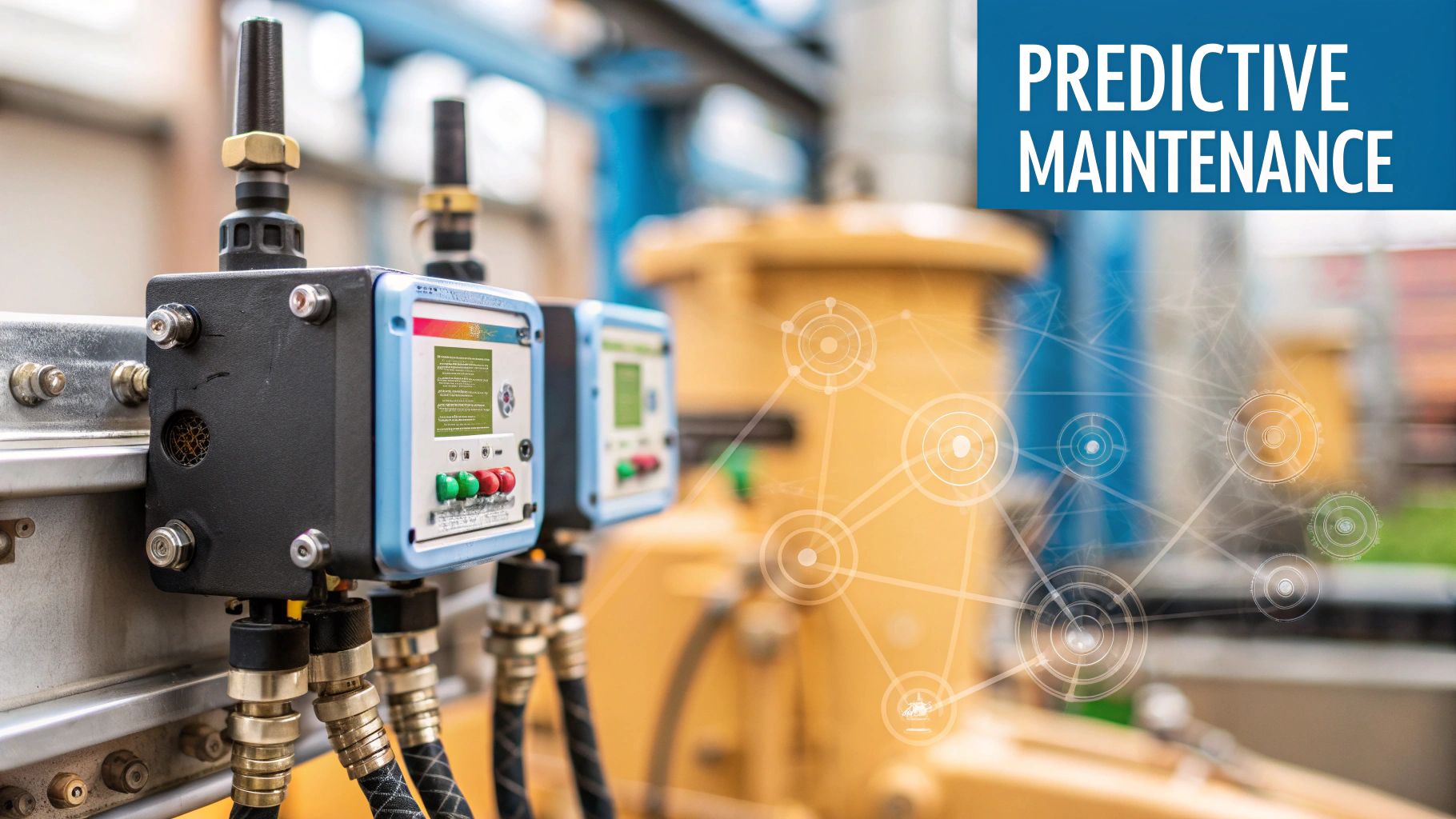
The traditional "break-fix" model of field service is rapidly becoming obsolete. Predictive maintenance, powered by the Internet of Things (IoT), represents a monumental shift from reactive to proactive service delivery. This approach uses sensors embedded in equipment to continuously collect operational data, which is then analyzed by machine learning algorithms to forecast potential failures before they happen.
By anticipating issues, organizations can schedule maintenance at the most convenient and cost-effective time, rather than scrambling to respond to an unexpected outage. This not only minimizes costly downtime but also extends asset lifespan and optimizes resource allocation. Integrating this strategy is a critical component of modern field service management best practices, transforming service operations from a cost center into a proactive, value-driven function.
How It Works and Why It Matters
Implementing a predictive maintenance model involves equipping assets with IoT sensors that monitor key performance indicators like temperature, vibration, and energy consumption. This real-time data is streamed to a central platform, where advanced analytics and AI models identify subtle anomalies and patterns that signal an impending failure. When the system detects a high probability of a breakdown, it automatically generates a service ticket and dispatches a technician with the correct skills and parts.
This proactive stance drastically reduces unplanned downtime, a major pain point for customers and a significant revenue drain for businesses. It also improves first-time fix rates because technicians arrive on-site already knowing the likely cause of the problem and equipped with the necessary components. The result is a more efficient, reliable, and customer-centric service operation.
- ThyssenKrupp leverages its MAX IoT solution to connect its elevators, predicting maintenance needs and preventing an estimated 95% of breakdowns.
- Caterpillar's predictive maintenance initiatives have helped reduce customer equipment downtime by as much as 30%.
- John Deere uses an advanced telematics system that alerts farmers to potential equipment issues, preventing failures during critical planting and harvesting seasons.
These industry leaders demonstrate that predicting failures is not just a theoretical concept but a proven strategy with a massive impact on operational efficiency and customer satisfaction.
Putting It into Practice
Successfully transitioning to a predictive maintenance model requires careful planning and a phased approach. To integrate this forward-thinking practice effectively, consider these key steps:
- Start with Critical Assets: Begin your implementation by focusing on equipment where failure results in the highest costs, whether due to production loss or service-level agreement penalties. This ensures a clear and immediate return on investment.
- Establish Performance Baselines: Before deploying predictive algorithms, collect historical data to establish what normal operation looks like for each asset. These baselines are essential for training the AI to accurately detect deviations.
- Train Technicians on New Alerts: Your field team must be trained to understand and trust the predictive alerts generated by the system. This includes knowing how to interpret the data and what actions to take based on the system's recommendations.
- Continuously Refine Algorithms: Predictive models become more accurate over time. Regularly feed actual failure data back into the system to refine the algorithms, improving their forecasting capabilities and reducing false positives.
By embracing this data-driven approach, organizations can optimize their service schedules and ensure asset reliability. For those looking to delve deeper, you can explore the relationship between condition monitoring and predictive maintenance to build a more robust asset management strategy.
4. Knowledge Management and Digital Documentation
In field service, institutional knowledge is a priceless asset. Knowledge management and digital documentation practices are designed to capture, organize, and democratize this asset, ensuring that expertise isn't confined to a few senior technicians. This approach establishes a centralized, accessible repository of technical manuals, repair procedures, troubleshooting guides, and historical service data. It moves organizations from scattered paper documents and tribal knowledge to a structured, searchable digital knowledge base.
This strategic shift ensures every technician, regardless of experience level, has access to the collective wisdom of the entire organization. By standardizing procedures and making information readily available, this practice directly supports consistent, high-quality service delivery. A robust knowledge management system is a cornerstone of scalable and resilient field service management best practices, transforming institutional expertise into an on-demand resource that boosts efficiency and empowers the entire workforce.
How It Works and Why It Matters
Implementing a knowledge management system means that when a technician encounters an unfamiliar or complex issue in the field, they can instantly access a digital library of solutions. Instead of making multiple calls or guessing at a fix, they can pull up schematics, watch video tutorials, or read step-by-step guides on their mobile device. This practice is critical for improving first-time fix rates, as it equips technicians with the precise information needed to diagnose and resolve issues correctly on the first visit.
The benefits ripple throughout the organization. New technicians can be onboarded and brought up to speed much faster, reducing training costs and time-to-productivity. For field service teams, easy access to information is paramount; explore these essential knowledge management strategies to build a system that truly empowers your workforce. This leads to a more confident, competent, and autonomous field team.
- Xerox leveraged its knowledge management system to improve its first-time fix rates by an impressive 35%.
- Dell Technologies found that comprehensive service documentation reduced its average repair time by 28%.
- Otis Elevator used digital manuals to decrease technician training time by 40%, accelerating skill development.
These examples demonstrate the direct correlation between accessible knowledge and improved operational performance.
Putting It into Practice
Creating a powerful knowledge base requires more than just uploading old manuals. It demands a strategic, ongoing effort to cultivate a culture of knowledge sharing. To build an effective system, consider these actionable steps:
- Involve Experienced Technicians in Content Creation: Your most seasoned technicians are your best source of practical knowledge. Empower them to contribute, review, and validate content to ensure it is accurate and relevant to real-world field scenarios.
- Use Multimedia Formats for Complex Procedures: Text isn't always the best medium. Use videos, annotated images, and 3D models to illustrate complex repairs and diagnostic processes, making them easier to understand and follow.
- Implement Feedback Mechanisms: Add features that allow technicians to rate, comment on, and suggest improvements for knowledge articles. This creates a continuous feedback loop that keeps the content fresh and reliable.
- Regularly Audit and Update Documentation: Equipment, procedures, and best practices evolve. Establish a regular audit schedule to review and update all documentation, removing outdated information and ensuring accuracy.
By integrating these strategies, organizations can transform their collective expertise into a powerful operational tool. To further enhance how this knowledge is delivered and applied, learn more about how effective training methods are evolving to meet the needs of the modern field service workforce.
5. Customer Communication and Transparency
In an age of on-demand services, customer expectations have evolved dramatically. A customer-centric approach that provides regular, proactive communication throughout the entire service journey is no longer a bonus, it's a necessity. This practice moves beyond reactive problem-solving by establishing a transparent and continuous dialogue, from the moment a service request is logged to its successful completion.
This strategy involves using automated notifications, real-time technician tracking, and multi-channel communication to keep customers informed and engaged at every step. By providing visibility into the service process, organizations demystify the experience, reduce customer anxiety, and build trust. Adopting this level of transparency is a critical component of modern field service management best practices, transforming the customer relationship from a transactional one into a lasting partnership.
How It Works and Why It Matters
Implementing proactive communication means that as soon as a job is scheduled, the customer receives an automated confirmation via their preferred channel, be it SMS, email, or a push notification. As the appointment nears, they receive reminders and a link to a live map showing the technician's real-time location and estimated arrival time, similar to the experience offered by ride-sharing apps. This simple feature drastically reduces "where is my technician?" calls and minimizes missed appointments.
The benefits are twofold. For the customer, it provides a sense of control and respect for their time, leading to significantly higher satisfaction scores. For the business, it streamlines operations, reduces the burden on call centers, and improves first-time success rates by ensuring the customer is prepared for the technician's arrival.
- Comcast reported that its proactive communication strategy, including technician tracking, led to a 45% reduction in customer complaints related to appointments.
- Best Buy's Geek Squad saw customer satisfaction scores improve by 30% after implementing a system that provides real-time service updates and technician tracking.
- Amazon's delivery communication model, with its precise tracking and notifications, has set a gold standard that customers now expect from all service providers.
These examples show a clear link between transparent communication and improved customer sentiment, which directly impacts loyalty and retention.
Putting It into Practice
Successfully integrating customer-centric communication requires more than just sending automated messages. It demands a thoughtful strategy focused on the customer's journey.
- Offer Channel Choice: Allow customers to select their preferred communication channels (e.g., SMS, email, app notifications) during the booking process. This simple personalization shows respect for their preferences.
- Use Branded Templates: Ensure all communications are professional and consistent with your brand identity. Use clear, concise language and include helpful information like the technician's name, photo, and direct contact details.
- Provide Opt-Out Options: While proactive communication is beneficial, customers should always have the ability to opt-out or manage their notification preferences easily.
- Integrate Feedback Requests: Immediately after a service is completed, send an automated request for feedback. This shows you value their opinion and provides crucial data for continuous service improvement.
For businesses looking to implement these capabilities, leading FSM platforms like Salesforce Service Cloud offer robust, integrated tools for managing the end-to-end customer communication lifecycle.
6. Skills-Based Resource Management
Sending a technician to a job is one thing; sending the right technician is another. Skills-based resource management is a strategic workforce practice that moves beyond simple availability and location. It involves categorizing technicians based on their specific skills, certifications, experience levels, and even language proficiency, then intelligently matching them to service requests that require their unique expertise.
This approach transforms dispatching from a logistical exercise into a strategic function. Instead of just filling a calendar slot, you are deploying the most qualified asset to resolve a specific problem efficiently. This methodical alignment is a critical component of modern field service management best practices, ensuring that complex issues are handled by experts, which dramatically boosts the likelihood of a successful first-time fix and enhances overall service quality.
How It Works and Why It Matters
Implementing skills-based routing means that when a service ticket for a specialized piece of machinery is created, the system doesn't just look for the closest available technician. It actively filters the workforce to find individuals certified to work on that specific equipment model. This ensures that the person arriving on-site has the precise knowledge needed to diagnose and repair the issue without needing to escalate or schedule a follow-up visit.
The impact on customer satisfaction is immediate. Customers gain confidence when they see a knowledgeable expert arrive who can solve their problem quickly. For the organization, this practice reduces repeat visits, minimizes warranty costs, and optimizes the use of high-value, senior technicians by reserving them for the complex jobs they are uniquely qualified to handle.
- IBM improved its problem resolution rates by 42% after implementing skills-based dispatching protocols.
- Schneider Electric saw a 38% reduction in repeat service visits by ensuring the correctly skilled technician was assigned the first time.
- Philips Healthcare increased customer satisfaction scores by 25% by deploying specialized technicians to service its complex medical equipment.
These examples demonstrate a clear link between matching skills to tasks and achieving superior operational outcomes.
Putting It into Practice
Successfully integrating a skills-based approach requires more than just new software; it demands a commitment to understanding and managing your workforce's capabilities. To implement this practice effectively, consider these steps:
- Regularly Assess and Update Skill Profiles: Create a dynamic skills matrix for your entire team. This should be a living document, updated regularly as technicians complete training, gain certifications, or acquire new on-the-job experience.
- Cross-Train Technicians: Increase scheduling flexibility by identifying common service needs and cross-training a broader group of technicians. This creates a deeper bench of qualified personnel and reduces dependency on a few key experts.
- Use Performance Metrics to Validate Skills: Link skill assignments to performance data like first-time fix rates and mean time to repair. Use this data to validate a technician's proficiency level and identify areas for future training.
- Create Incentive Programs: Encourage continuous learning by offering incentives for technicians who earn new certifications or master advanced skills. This aligns individual career growth with organizational service goals.
By developing a robust framework for managing and deploying talent, organizations can ensure that their most valuable assets-their people-are always in the right place to succeed. For a comprehensive look at managing your team's capabilities, learn more about how to implement and track skills-based resource management to build a more agile and effective field service workforce.
7. Performance Analytics and Continuous Improvement
You can't improve what you don't measure. A data-driven approach to performance analytics is the practice of systematically measuring, analyzing, and acting upon key performance indicators (KPIs) to continuously optimize field service operations. This moves beyond simple reporting by using advanced analytics, dashboards, and diagnostic tools to uncover trends, identify operational bottlenecks, and pinpoint opportunities for improvement across the entire service delivery chain.
This best practice transforms raw data from service calls, technician activities, and customer feedback into actionable intelligence. It provides a clear, objective view of what's working and what isn't, enabling leaders to make informed decisions that enhance efficiency, profitability, and customer satisfaction. Adopting a culture of continuous improvement, fueled by robust analytics, is a hallmark of modern field service management best practices, turning operational data into a strategic asset.
How It Works and Why It Matters
Implementing a performance analytics framework means establishing a single source of truth for all service-related data. When a job is completed, data points like travel time, repair duration, parts used, and first-time fix rate are fed into an analytics platform. This information is then aggregated and visualized in real-time dashboards, allowing managers to monitor performance against established benchmarks and immediately address any deviations.
The benefits are profound and far-reaching. By tracking KPIs, organizations can identify underperforming technicians who may need additional training, or highlight systemic issues like frequent part stockouts that delay repairs. This proactive approach not only boosts operational efficiency but also directly impacts the bottom line by reducing costs and increasing service capacity. For customers, this translates into more reliable service and faster issue resolution.
- Johnson & Johnson utilized an analytics platform to enhance its service delivery, resulting in a 32% improvement in overall service efficiency.
- Maersk, a global logistics leader, leveraged performance monitoring to decrease its average service response time by a significant 27%.
- Rolls-Royce's TotalCare program uses advanced engine health analytics to predict maintenance needs, preventing failures and optimizing service schedules for its airline customers.
These examples demonstrate how a commitment to data-driven improvement yields tangible, measurable results in complex service environments.
Putting It into Practice
Successfully integrating performance analytics requires more than just adopting a new tool; it demands a strategic cultural shift toward data-informed decision-making. To build a robust analytics program, consider these actionable steps:
- Focus on Actionable KPIs: Identify and track metrics that directly influence business outcomes, such as First-Time Fix Rate, Technician Utilization, Mean Time to Repair (MTTR), and Customer Satisfaction (CSAT). Avoid "vanity metrics" that don't drive meaningful action.
- Create Role-Specific Dashboards: Tailor dashboards to the needs of different stakeholders. A field technician needs to see their daily schedule and performance, while a regional manager needs a high-level view of team productivity and SLA compliance.
- Establish Regular Performance Reviews: Implement a cadence of regular performance review meetings (weekly, monthly, quarterly) where teams analyze KPI trends, discuss root causes, and create concrete action plans for improvement.
- Use Predictive Analytics: Go beyond historical reporting. Leverage predictive analytics to forecast future demand, anticipate potential equipment failures, and proactively identify customers at risk of churn, allowing your team to address issues before they escalate.
By embedding these practices into your operational rhythm, your organization can foster a powerful cycle of continuous improvement that drives sustained growth and competitive advantage.
7 Key Best Practices Comparison
| Item | Implementation Complexity 🔄 | Resource Requirements ⚡ | Expected Outcomes 📊 | Ideal Use Cases 💡 | Key Advantages ⭐ |
|---|---|---|---|---|---|
| Real-Time Scheduling and Dispatch Optimization | High – requires advanced algorithms and reliable connectivity | Significant technology investment, skilled dispatchers | Reduced travel time (25%), increased job completion, better first-time fix rates | High-density service areas needing dynamic scheduling | Maximizes resource utilization, improves customer satisfaction |
| Mobile-First Technology Platform | Medium – integration with devices and back-office systems | Requires rugged mobile devices and MDM | Eliminates paperwork, improves data accuracy and communication | Field operations needing digital data capture and connectivity | Real-time updates, reduces administrative overhead |
| Predictive Maintenance and IoT Integration | High – IoT infrastructure and data analytics expertise needed | High investment in sensors and analytics | Up to 50% reduction in unplanned downtime, extended equipment life | Equipment with costly downtime and failure risks | Proactive maintenance, optimized scheduling and inventory |
| Knowledge Management and Digital Documentation | Medium – ongoing content updates and quality control needed | Requires content creators and change management | Improved first-time fix rates, reduced training time | Organizations seeking standardized procedures and knowledge retention | Accelerates technician learning, preserves expertise |
| Customer Communication and Transparency | Medium – integration across multiple communication channels | Multichannel communication tools and automation | Increased customer satisfaction, reduced no-shows and complaints | Service journeys requiring transparency and engagement | Builds trust, decreases support call volume |
| Skills-Based Resource Management | Medium to High – ongoing skills tracking and scheduling adjustments | Systems for skills inventory and training programs | Improved first-time fix rates, higher technician satisfaction | Organizations with varied technician skills and certifications | Optimizes workforce, targeted training and development |
| Performance Analytics and Continuous Improvement | Medium – requires analytics tools and trained users | Advanced dashboards and reporting systems | Operational efficiency improvements, data-driven decisions | Companies aiming for continuous optimization and strategic planning | Identifies bottlenecks, supports compensation models |
Activating Your Modern Field Service Strategy
The journey toward operational excellence in field service management is not a single destination but a continuous process of refinement and adaptation. Moving beyond theoretical concepts to practical application is what separates industry leaders from the rest. The seven field service management best practices detailed in this article-from intelligent scheduling and mobile-first empowerment to predictive maintenance and robust performance analytics-provide a comprehensive blueprint for transforming your operations from a cost center into a powerful engine for customer satisfaction and revenue growth.
Adopting these practices creates a resilient, efficient, and proactive service ecosystem. However, the true catalyst for a quantum leap in performance lies in fundamentally rethinking how expertise is cultivated and deployed across your workforce. This is where advanced technologies like Augmented and Virtual Reality become indispensable tools, not just futuristic novelties.
From Incremental Improvements to Transformational Change
Implementing a mobile-first platform or optimizing your dispatch schedule will undoubtedly yield positive results. These are foundational pillars of a modern service operation. Yet, the most persistent challenges-the widening skills gap, the high cost of rework, and the logistical nightmare of dispatching senior experts to every complex issue-require a more disruptive solution. This is the strategic inflection point where immersive learning and remote assistance redefine what's possible.
Consider the impact of these technologies on the core practices:
- Skills-Based Resource Management: AR training platforms allow you to create standardized, high-fidelity training simulations. This ensures every technician, regardless of their initial experience level, can practice complex procedures in a safe, controlled environment, dramatically accelerating their path to proficiency. A practical use case involves a new HVAC technician using a VR simulation to practice a complex compressor replacement, reducing the chance of errors on a real customer site.
- Knowledge Management: Instead of relying on static PDFs or lengthy videos, technicians can access interactive, AR-powered digital work instructions directly in their line of sight. This turns your knowledge base into a dynamic, contextual tool that guides them through tasks step-by-step. For example, a technician servicing an industrial generator can overlay a digital schematic onto the physical machine, with AR highlighting the specific components to inspect.
- Performance Analytics: Remote support tools that use AR not only solve immediate problems but also generate invaluable data. Every remote session can be recorded and analyzed to identify common failure points, knowledge gaps, and opportunities for new training modules, fueling a cycle of continuous improvement. This allows a senior expert to guide a junior technician through a difficult repair from thousands of miles away, solving the customer's problem faster and creating a training asset simultaneously.
Integrating these advanced solutions is a core component of a forward-thinking operational plan. For inspiration on implementing a modern field service approach, explore top digital transformation strategy examples that can reshape your business operations.
Your Actionable Path Forward
Embarking on this transformation doesn't require a complete operational overhaul overnight. A strategic, phased approach is the key to building momentum and securing stakeholder buy-in. Start by identifying your single most significant pain point. Is it first-time fix rate? Technician ramp-up time? Customer satisfaction scores?
Once you have a clear target, select the best practice from this guide that directly addresses it. For instance, if your first-time fix rate is suffering due to a lack of on-site expertise, piloting an AR-based remote expert support system is a logical first step. Measure the impact, showcase the ROI, and use that success to champion the next phase of your modernization initiative. By systematically implementing these field service management best practices, you don't just fix today's problems-you build a scalable, intelligent, and future-proof operation ready to meet the challenges of tomorrow. The result is a more empowered workforce, more satisfied customers, and a distinct competitive advantage in the marketplace.
Ready to bridge the skills gap and empower your technicians with next-generation tools? AIDAR Solutions provides the AR/VR platforms you need to implement these advanced field service management best practices. Explore how AIDAR Solutions can revolutionize your training and remote support, turning every field technician into an expert.