Preventative and Predictive Maintenance Explained
Running your equipment until it breaks is a high-stakes gamble that guarantees losses in time, money, and production. The fundamental difference between reactive and proactive maintenance is simple: one waits for a breakdown, while the other—preventative and predictive maintenance—works to stop it from ever happening. This strategic shift isn't just a nice-to-have anymore; it's a competitive necessity.
Why Proactive Maintenance Is No Longer Optional
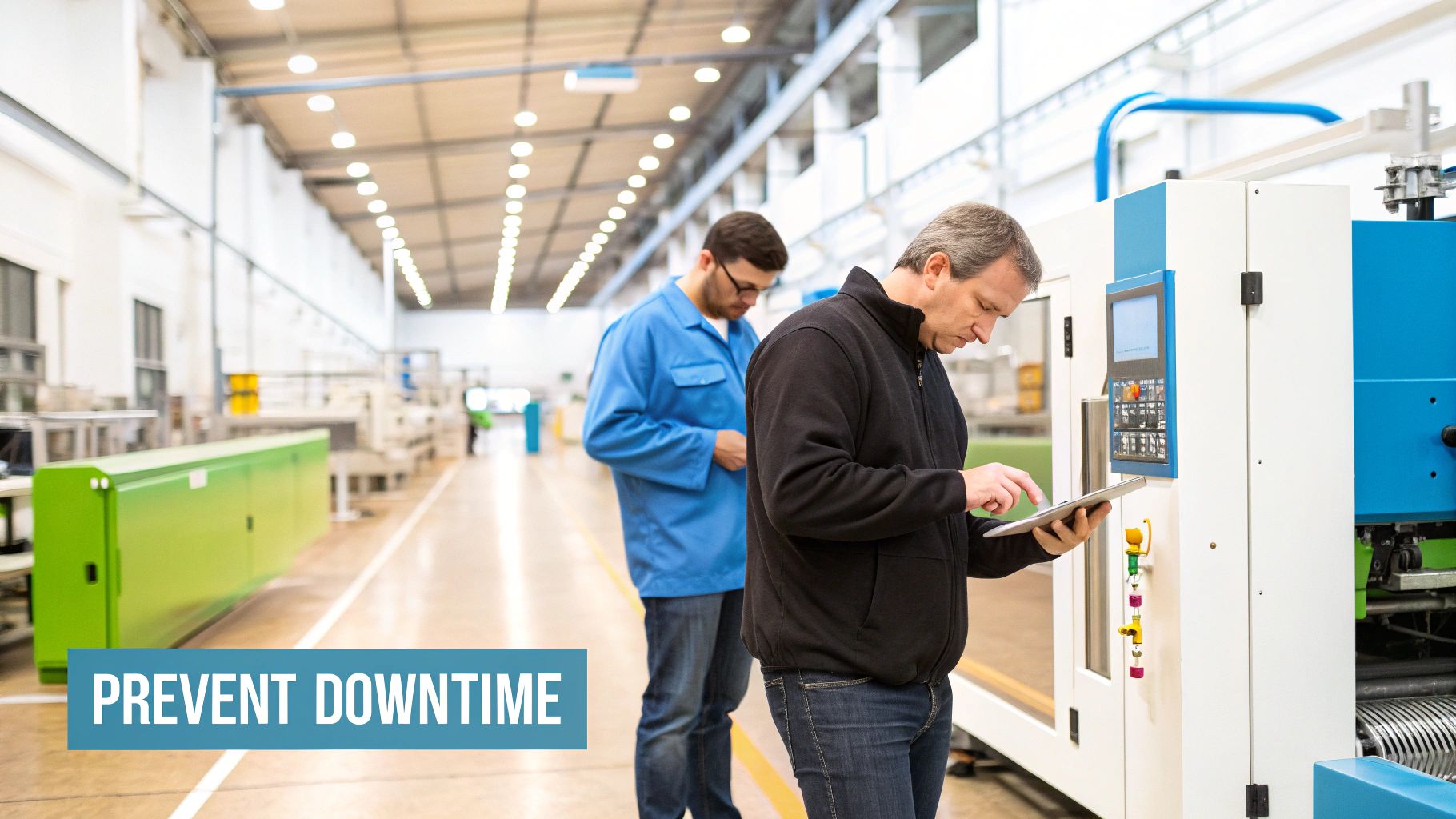
In any industrial setting, unplanned downtime is the silent killer of profitability. It’s not just about a single broken part; it triggers a domino effect of negative consequences. Every minute a critical machine is offline, costs pile up from lost output, idle labor, and potential chaos across your supply chain. The old "run-to-failure" approach turns these preventable hiccups into full-blown, expensive emergencies.
Adopting a proactive mindset completely flips this script. Instead of constantly reacting to crises, you start anticipating and heading off potential failures before they can cause damage. This modern approach is built on two key pillars.
Proactive maintenance moves an organization from a state of constant firefighting to one of strategic control. It's about taking ownership of asset health to drive reliability, safety, and operational excellence.
The Evolution from Calendar to Condition
The journey toward true reliability started with preventative maintenance. This is a strategy based on scheduled, routine checkups—like changing a vehicle's oil at a set interval. While it’s a huge leap forward from waiting for a breakdown, this calendar-based method can lead to fixing things that aren't broken or, worse, missing the early warning signs of premature failure.
The next evolutionary step is predictive maintenance, an intelligent, data-driven strategy. By using sensors and analytics, this method monitors the actual condition of your equipment in real-time, allowing you to forecast failures with remarkable accuracy.
This shift from fixed schedules to intelligent forecasting is what gives modern facilities their competitive edge. To see how these principles apply even to everyday equipment, a guide on proactive maintenance on garage door systems can offer a clear, relatable example.
As we'll explore, technologies like AR and VR are now making these strategies more actionable than ever, turning complex data insights into guided, hands-on tasks right on the factory floor.
Preventative vs Predictive Maintenance Unpacked

Let's break down the difference between preventative and predictive maintenance with a simple analogy: your car.
Taking your car in for an oil change every 5,000 miles is classic preventative maintenance. It’s a strategy built around a fixed schedule—time or usage—regardless of how the oil is actually holding up. You're following a rule of thumb to stop problems before they start. It's a reliable, time-tested approach.
Now, picture your car's dashboard flashing an alert: "Oil Life at 15%." That's predictive maintenance. The trigger isn't a calendar date but real-time data from sensors monitoring your engine. This shifts the focus from a "just-in-case" schedule to a precise, "just-in-time" intervention based on actual need.
From Fixed Schedules to Real-Time Conditions
For decades, preventative maintenance has been the bedrock of industrial operations. It runs on the assumption that equipment wears down at a fairly predictable rate, making scheduled servicing a solid way to avoid common failures. For example, a key part of preventative care for hydraulic systems involves maintaining ideal operating temperatures to extend equipment life.
But this method isn't perfect. It can't account for unique operational stresses or the subtle, early signs of unusual wear and tear. This often leads to replacing a part that was working just fine or, even worse, having a component fail right before its next scheduled check-up.
This is where predictive maintenance changes the game. It’s about listening to what the machine is telling you, right now. By using sensors to track things like vibration, temperature, and other vital signs, it can forecast potential failures with impressive accuracy. This allows teams to step in exactly when needed, getting the most out of every asset and cutting out unnecessary work. You can dive deeper into this topic in our complete guide on condition monitoring and predictive maintenance.
Preventative vs Predictive Maintenance at a Glance
To make the choice clearer, let’s put these two strategies side-by-side. Although they both share the goal of preventing downtime, their approaches, costs, and applications are worlds apart.
| Attribute | Preventative Maintenance | Predictive Maintenance |
|---|---|---|
| Trigger | Time, meter readings, or cycles (Schedule-based) | Real-time asset condition data (Condition-based) |
| Data Needs | Manufacturer recommendations and historical averages | Live sensor data (vibration, temperature, etc.) and AI analysis |
| Cost Profile | Lower initial setup; potential for higher long-term costs due to unneeded labor and parts | Higher initial investment in technology; lower long-term costs through optimized resource use |
| Best For | Less critical assets, components with predictable wear patterns, and compliance-driven tasks | Mission-critical machinery, assets with complex failure modes, and operations where downtime is costly |
This comparison clearly shows an industry in transition. While preventative maintenance is still the most common approach, predictive methods are quickly gaining ground. This hybrid approach signals a major shift toward smarter, more data-driven ways of managing critical assets.
Building the Business Case for Data-Driven Maintenance
Making the leap from a schedule-based to a data-driven maintenance strategy isn't just an operational tweak—it's a serious financial decision. The business case for preventative and predictive maintenance is built on tangible returns that go straight to the bottom line, turning what was once a cost center into a strategic driver of profitability.
The most immediate win? A massive drop in unplanned downtime. By seeing equipment failures coming, you can schedule repairs during planned shutdowns. What used to be a costly emergency is now just a controlled, efficient procedure. This proactive approach gives a direct boost to your Overall Equipment Effectiveness (OEE), a vital measure of manufacturing productivity. When machines run like they're supposed to, output climbs without adding more equipment or shifts.
Unlocking Financial and Operational Gains
Beyond just keeping the lights on, a predictive approach significantly extends the life of your machinery. Instead of swapping parts on a fixed schedule, your teams can squeeze every bit of value out of each component, replacing it only when the data says it's time. This "just-in-time" repair model stops premature replacements and cuts down on waste.
This targeted strategy also leads to much smarter inventory management. Holding a huge stock of spare parts ties up a ton of capital. Predictive analytics lets you run a leaner, more strategic inventory because you can anticipate which parts you'll need and when, freeing up cash to be invested elsewhere.
Adopting predictive maintenance isn't just about fixing machines before they break. It’s about creating a more resilient, efficient, and safer operational environment where data drives decisions and resources are used with maximum impact.
A Market Embracing Strategic Investment
The widespread adoption of these advanced monitoring technologies shows a clear industry consensus. The global predictive maintenance market has seen explosive growth, recently valued between USD 10.93 billion and USD 13.65 billion. And it's not slowing down. Projections show the market rocketing to between USD 44 billion and USD 97.37 billion by 2032-2034. You can dig into the numbers in this industry report.
This rapid expansion is a clear signal: business leaders no longer see predictive maintenance as some experimental tactic but as a necessary strategic investment. Another huge benefit is enhanced workplace safety. By flagging potential failures—like an overheating electrical component or excessive motor vibration—teams can get ahead of hazards before they cause an accident, protecting both people and assets.
Want to learn more? We have a whole article dedicated to how you can reduce downtime in manufacturing. In today's competitive landscape, the ability to operate safely and without interruption is a game-changing advantage.
Your Roadmap to Implementing Predictive Maintenance
Making the move to a predictive maintenance model is a journey, not an overnight flip of a switch. It’s a deliberate process of figuring out which machines matter most, putting the right technology in place, and building a culture that actually listens to the data. The goal is to get this out of the boardroom and into a practical program that adds real value.
The first step is always strategic. Don’t try to monitor everything at once—that’s a recipe for disaster. Zero in on your mission-critical assets, the ones where a failure would bring operations to a screeching halt or cost you a fortune. This targeted approach guarantees your initial investment packs the biggest punch.
Once you know what to watch, you need to establish a performance baseline. This is all about understanding what "normal" looks like when your equipment is running healthy. Collecting this initial data is absolutely essential because it gives your future analytics a benchmark to measure against, making it possible to spot the tiny deviations that signal trouble on the horizon.
Assembling Your Technological Foundation
With a clear focus, you can start building out your tech stack. This isn’t about a shopping spree for every new gadget. It’s about creating a connected system where data flows seamlessly from machine to insight.
The core components of this foundation are pretty straightforward:
- IoT Sensors: Think of these as the nervous system for your operation. They collect real-time data—vibration, temperature, and other key health indicators—directly from your equipment.
- Data Infrastructure: You’ll need a robust system to handle the sheer volume of data your sensors will generate. This could be a cloud platform or an on-premise solution, but it has to be solid.
- AI and Machine Learning: This is the brain of the whole operation. AI-powered algorithms chew through the incoming data, spotting subtle patterns invisible to the human eye and spitting out actionable failure predictions.
This diagram shows how all these pieces come together to deliver a clear return on investment through less downtime, longer equipment life, and lower overall maintenance costs.
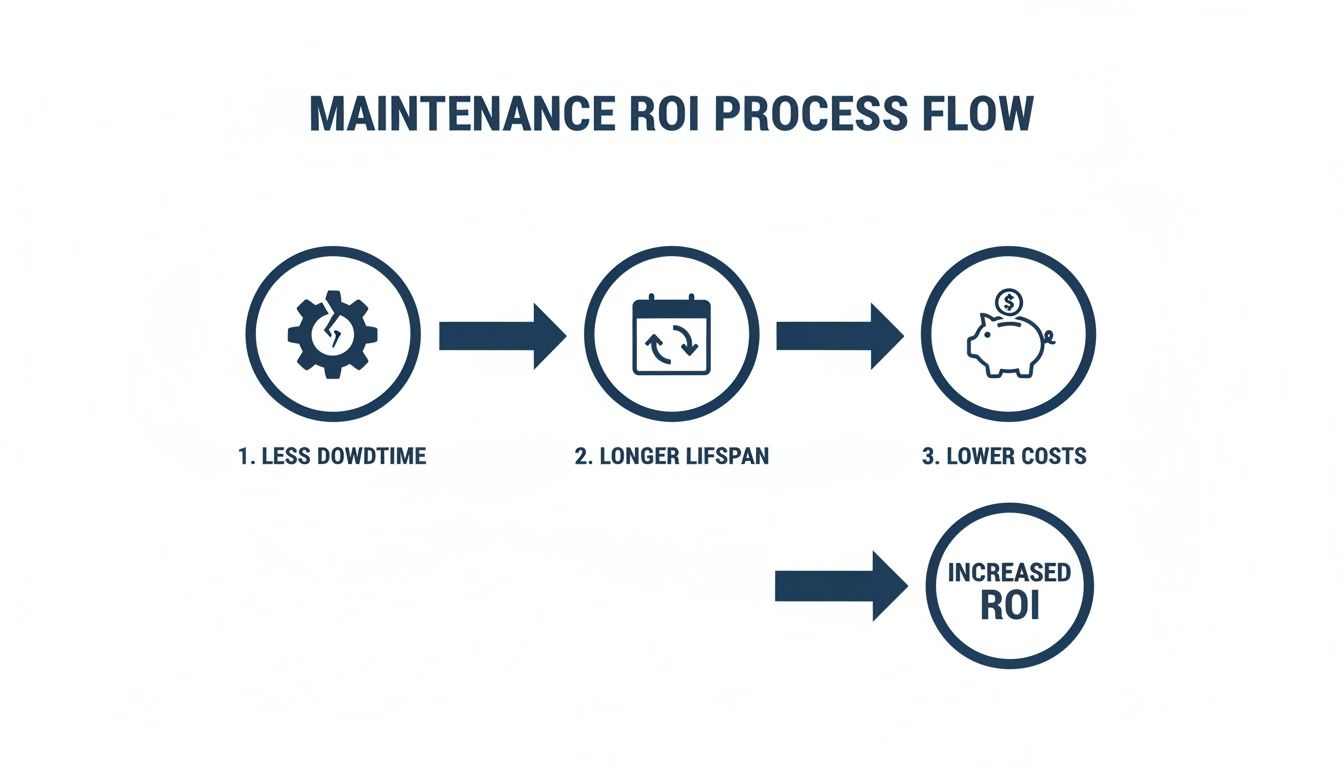
You can see a clear line from proactive monitoring straight to tangible business outcomes, framing predictive maintenance as a direct driver of operational efficiency.
Empowering Your Team for Success
Here’s the thing: technology alone won’t get you there. The final, and arguably most important, piece of the puzzle is your people. A successful predictive maintenance program demands a cultural shift towards data-driven decisions.
The most advanced analytics are useless if your team doesn't trust the data or know how to act on the insights. True success comes from empowering people with the right tools and the right skills to make smarter maintenance decisions.
This means training your maintenance teams to understand and interpret the data coming from the new systems. They have to learn to move from a rigid, calendar-based mindset to a flexible, condition-based one, trusting the predictive alerts to guide their work. Fostering this data-centric culture is the only way to ensure the insights generated by your tech are translated into timely, effective action on the factory floor.
To see this strategy in action, check out our deep dive into applying predictive maintenance in manufacturing.
How Immersive Technology Is Changing the Maintenance Game
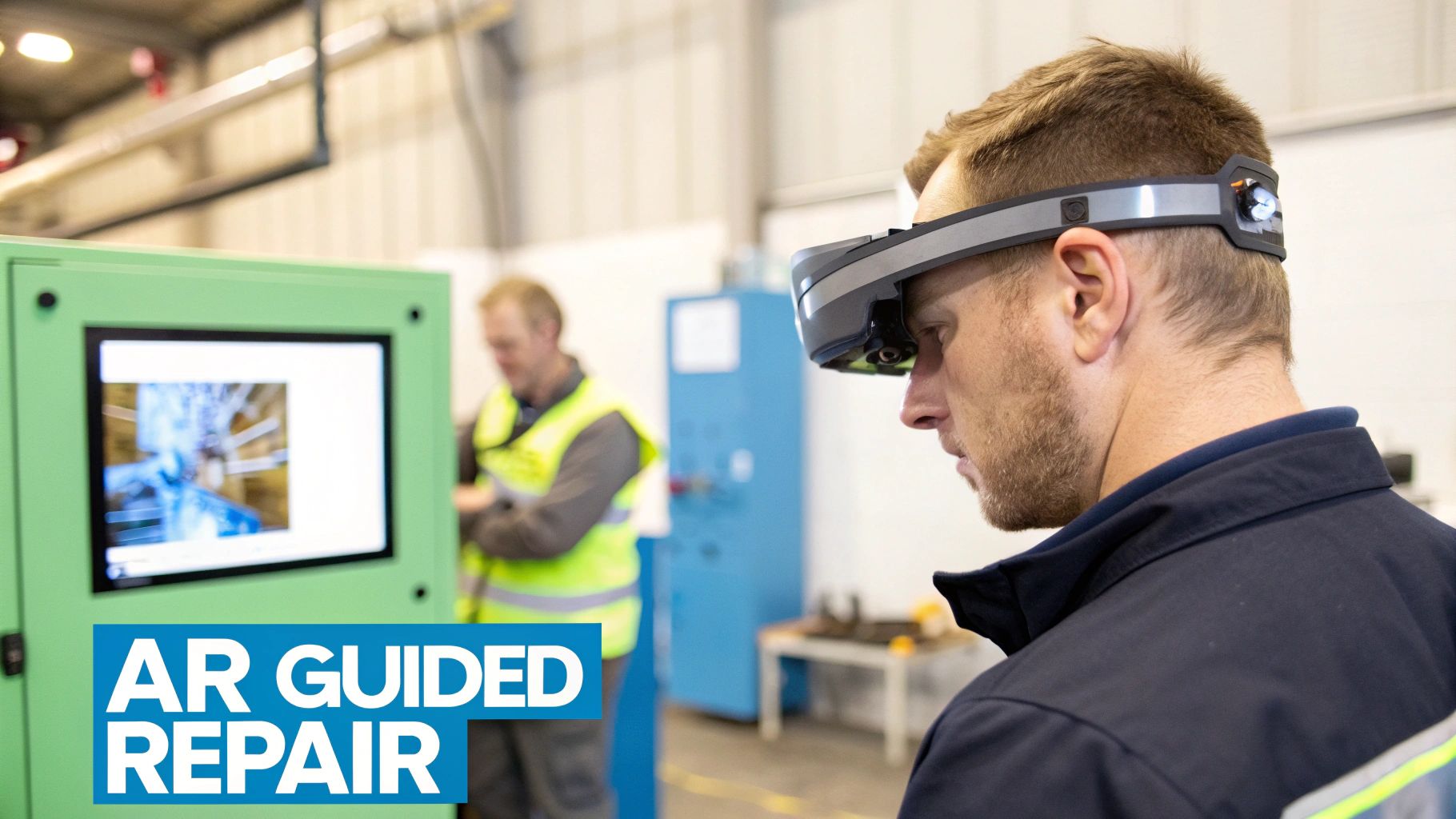
Sensors and AI can identify what needs attention and when. Immersive technologies like Augmented Reality (AR) and Virtual Reality (VR) elevate the how. These tools bridge the gap between abstract data and the real-world, hands-on work required to maintain operational uptime, turning analytical insights into immediate, effective action.
Virtual Reality provides a powerful, risk-free training environment. Technicians can practice complex repairs on a digital twin—a perfect virtual copy of a machine—rather than on live, high-value equipment. This lets them build muscle memory, diagnose common faults, and get comfortable with intricate procedures without any risk of damaging actual assets or causing a production stoppage. It’s a game-changer for getting new hires up to speed, dramatically shortening the learning curve and slashing the odds of costly rookie mistakes.
Bridging the Skills Gap with Augmented Reality
Augmented Reality takes things a giant leap further by injecting digital guidance directly into the technician's real-world view. A technician looking at a complex piece of equipment through an AR headset can see step-by-step instructions, digital checklists, and critical sensor readings projected right onto the machine they’re working on.
This is a direct answer to the skills gap. A junior technician can perform a complex task with the confidence of a 20-year veteran, guided by an expert digital overlay.
By overlaying digital instructions onto the physical world, AR empowers technicians to execute tasks with greater speed, accuracy, and safety. It transforms maintenance from a memory-based process into a guided, interactive workflow.
Putting It All to Work: Real-World Value
This isn't theory; it’s delivering results today. When a predictive alert flags an impending failure, that data can be pushed directly to a technician's AR device, highlighting the exact component that needs attention and eliminating guesswork.
Consider these practical applications:
- Remote Expert Assistance: An on-site technician can instantly connect with a specialist anywhere in the world. The expert sees exactly what the technician sees and can draw annotations in their field of view to pinpoint the problem. This significantly reduces mean-time-to-repair (MTTR) and travel costs.
- Visualizing Predictive Alerts: A maintenance manager can walk the floor and see the health status of every asset at a glance. An AR overlay might show a healthy green glow on most machines, but a blinking red warning over the one flagged by the predictive system. It's an instant, intuitive health check of an entire operation.
When you combine the foresight of predictive analytics with the guided execution of immersive tools, you create a maintenance ecosystem that is light-years more efficient and resilient. Want to learn more? Check out our detailed guide on how to get started with augmented reality for maintenance.
Common Implementation Pitfalls to Avoid
Making the switch to a modern maintenance strategy is a game-changer, but the road from a great idea to a running system is full of potholes. Just throwing money at new tech won't cut it. To build something that actually works and lasts, you first need to understand the common traps that sink even the most well-planned preventative and predictive maintenance programs.
One of the biggest mistakes we see is underestimating how crucial good data is. A predictive model is only as smart as the information you feed it. If you're working with incomplete or just plain wrong data, you're going to get unreliable predictions. This is the classic "garbage in, garbage out" problem, and it's the fastest way to lose your team's trust in the new system before it even gets off the ground.
Another classic misstep is trying to boil the ocean—monitoring every single piece of equipment right away. It’s a tempting idea, but applying complex analytics to non-critical assets just splits your focus and gives you a terrible return on your investment. The trick is to start small and be strategic. Pinpoint the machinery where a failure would cause the biggest headaches, financially or operationally, and start there.
Navigating Data and Culture Hurdles
Beyond the tech, the human element can be an even bigger roadblock. Maintenance crews who are used to getting their hands dirty and relying on experience might look at new, data-driven workflows with a healthy dose of skepticism. If you don't bring them along for the ride with clear communication and real training, that shiny new system will end up collecting dust.
A successful maintenance program is built on more than just sensors and software. It requires a foundational shift in mindset, where data is viewed as a critical asset and teams are empowered to act on its insights.
So, how do you sidestep these issues? Here are a few practical ways to get ahead of them:
- Start with a Pilot Program: Don't go for a "big bang" rollout. Pick one critical asset and start there. This lets you iron out the kinks in your data collection, show off some real, tangible wins, and build up your team's confidence before you go bigger.
- Prioritize Integration: Make sure your new predictive tools play nicely with your existing Computerized Maintenance Management System (CMMS). A clunky, disjointed system just creates extra work and makes it that much harder for technicians to get on board with the new way of doing things.
- Focus on Change Management: Spend time training your team not just on how to use the new tools, but on why this change is happening. Show them how this technology makes their jobs safer, more strategic, and less about fighting fires. When they see the benefits for themselves, your biggest critics can become your biggest champions.
Got Questions? We've Got Answers
When you start exploring more advanced maintenance strategies, a few common questions always pop up. Let's tackle them head-on to help clear the path for your decision-making.
Where’s the Best Place to Start?
Jumping from preventative to predictive maintenance can feel like a huge leap, but the best approach is to start small and prove the concept. Don't try to boil the ocean.
Pick a single, high-value asset—one where an unexpected failure would really hurt—and focus on its most common failure modes. From there, you can install the right sensors, start gathering baseline performance data, and use that to build and test your very first predictive model. It’s a manageable first step that delivers real-world learnings.
What Kind of Investment Are We Talking About?
The cost of a predictive maintenance program can vary quite a bit, depending on how big you go and what you need—things like sensors, software, and getting your team trained up.
But it’s critical to see this as an investment, not just another expense line. The real ROI comes from stamping out costly unplanned downtime and squeezing every last drop of operational life out of your equipment. It pays for itself, often much faster than you'd think.
Modern maintenance platforms are designed to talk to your existing CMMS and EAM systems. This means a predictive alert can automatically trigger a guided AR work instruction for a technician, creating a seamless and incredibly efficient workflow from problem detection to resolution.
How Do AR and VR Tools Fit Into This?
This is where things get really interesting. Immersive tech platforms today are built to integrate smoothly with the systems you already use, like your CMMS or EAM.
This connection creates a powerful, automated loop. Imagine a predictive alert flagging a potential failure. Instead of just sending an email, the system can automatically push a guided AR work instruction directly to the right technician’s headset. They show up on-site with the exact steps they need, overlaid on the real equipment, turning a complex repair into a straightforward task.
Ready to see how immersive technology can transform your maintenance and training programs? AIDAR Solutions offers the expert guidance and powerful AR/VR tools you need to slash downtime and boost efficiency.
Find out how we can help at https://aidarsolutions.com.